Product Walkthroughs
Video-to-Article · Latest
How a LiFePO4 Battery Is Made: From Cell to Pack on One Line
A factory walkthrough of LiFePO4 battery production: slurry mixing and coating, rolling and slitting, winding, electrolyte filling, formation and capacity grading, then pack assembly and burn-in testing.
LiFePO4 Battery Manufacturers: A Screening Method That Beats Any List
Most "top 10 brand" lists are paid placements. This guide separates cell makers, pack assemblers, and traders, shows where to find real suppliers, and names the three documents that expose a factory that cannot ship.
Inside an ESS Production Line: From Cell Intake to Burn-In and Shipment
A walkthrough of a storage pack line: incoming cell inspection, laser spot welding, enclosure assembly with BMS, two full burn-in cycles, and manual re-inspection. Plus the questions to ask your contract manufacturer.
What Testing Equipment a Real Battery Factory Owns
Inside a Dongguan storage factory's own test centre: 100V/60A and 60V/50A burn-in cabinets, a capacity-grading cabinet, a 3000W laser welder, a 100V/320A综合 tester, and an integrating sphere. Plus two semi-auto PACK lines and three assembly lines.
A 32kWh LiFePO4 Pack: 51.2V 628Ah Configuration and Interfaces
The largest single unit we currently build: 51.2V 628Ah, roughly 32kWh, built with grade A cells from a first-tier maker, rated 6,000-8,000 cycles, five-year warranty. Fitted with a Jikong active-balancing BMS, a 7-inch touchscreen, and multi-language UI.
Inside a Storage Factory's Engineering Team: 2D Design to Hot Load Testing
Seven engineers own the full product lifecycle: 2D/3D and industrial design, small-batch prototyping, thermal and cycle testing, SOP work instructions, hot load testing with waveform checks on inverters, custom development, and after-sales repair.
US-Spec vs EU-Spec All-in-One Storage: Voltage, Power, and Labels
Both at 16kWh, the US model is 7.2kW with split-phase 120V/220V output while the EU model is 6kW with a different voltage scheme. Export also requires UN3480 dangerous goods labelling, and a 32kWh unit at 220kg ships in a crate braced with plywood.
Energy Storage Battery Manufacturers: Home, C&I, and Container Are Three Different Lines
Searching for energy storage manufacturers returns one mixed list. Wall-mounted home units, C&I cabinets, and containerized systems demand different production lines. This guide narrows the field by application first.
How to Choose a Portable Power Station: Capacity, Surge, and Cells
Most buyers look only at watt-hours and then find the unit will not start their appliance. This guide covers how to read Wh, why surge rating matters more than rated watts, LiFePO4 versus NMC, and the jobs a portable station simply cannot do.
48V Rack Battery Torn Down and Weighed: What a "100Ah" Pack Really Weighs
Rack-mount storage packs are the workhorse of off-grid and commercial projects. This 48V 100Ah unit is opened up — cell layout, BMS placement, and a scale reading. The trap every buyer misses: capacity overstatement.
All-in-One Home Storage, Torn Open: One Cabinet Does Solar, Storage, and Inverting
A split home solar setup makes you size the inverter, wire the battery, and tune parameters yourself. This all-in-one cabinet packs the battery, inverter, and MPPT controller into one box. A teardown of what is actually inside.
All-in-One Solar Battery: Stackable vs Built-In, and Why Africa and Europe Differ
Two forms of all-in-one storage, what each fits, why African households start small and European buyers prioritise fixed safety, and how large a stacked system can go.
Home Batteries Are Not Just for Export: 3 China Use Cases and 10ms UPS Switch
Many assume storage is only for export. Three domestic scenarios, peak-valley arbitrage, and a 10ms UPS switch explain what storage actually solves.
51.2V 314Ah Pack Torn Open: What a "16kWh" Battery Actually Holds
This 51.2V 314Ah pack is rated 16kWh but measured 326Ah on Grade-A cells with positive tolerance. The video walks through four things buyers skip when sizing a large pack: cell grade, voltage balance, active-balancing BMS, and burn-in testing.
Sizing an Off-Grid Solar System for a Vietnamese Home: 1000 kWh/Month, Worked Out
Using a Vietnamese household at 1000 kWh/month and the local ~5 sun-hours/day, this walks step by step to the PV kilowatts, inverter size, and battery kilowatt-hours you actually need — plus roof types and panel count.
Picking a 12V/24V Wall-Mount LiFePO4: Three Traps in Lead-Acid Swap Kits
The 12V/24V small system is the highest-volume slice of home storage. Old lead-acid-swap kits share three flaws: hollow enclosures packed with EVA, no voltage/charge display, and refurbished cells with overstated capacity. The new builds use standard stationary-grade A cells with accurate displays and true capacity.
Six Things to Check Before Picking a Storage OEM Partner
Traders and brand owners want their own storage label, but price is the wrong first filter. Six dimensions separate a partner worth keeping: full product line, ready-to-use marketing assets, end-to-end support, quality components, export certifications, and neutral OEM supply.
Portable Power Station Ports Explained: Know These Jacks Before You Buy
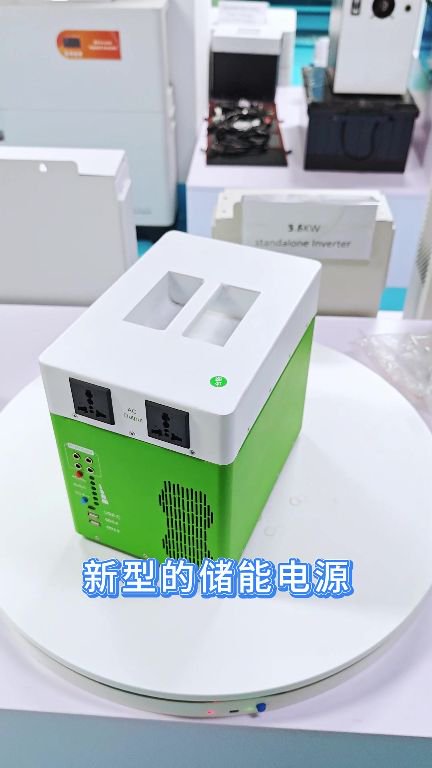
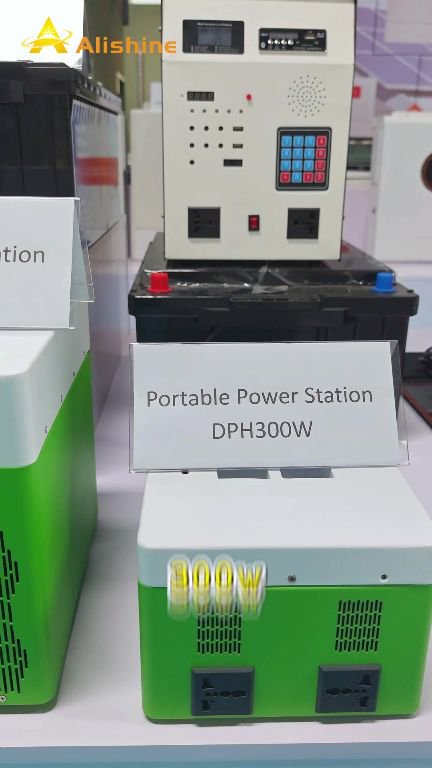
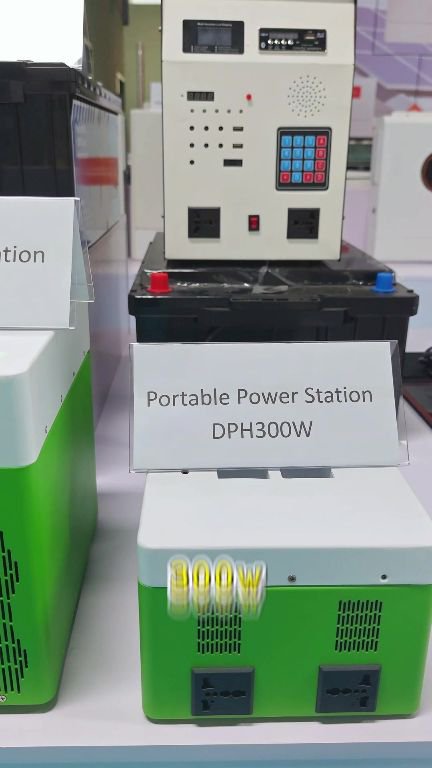
Three tiers at 300W/500W/1000W, storing 0.65/1/2 kWh, with solar input capped at 300/300/550W. Front has the red master switch, USB-C, DC and AC; back has AC input, PV input and a vent. This breaks down what each port does and what it can run, for road trips and camping.
How to Choose a Solar Street Light Battery: Pole Height, Cycle Life, and Who Supplies It
A street light battery lives on a pole, and swapping one is ten times harder than a home battery. This covers what pole height an all-in-one solar street light fits, why LiFePO4 cycle life matters more than unit price, and the difference between a factory-direct supplier and a trading reseller.
Inside a 12kW + 32kWh All-in-One: Custom Colors, Rear Ports, and a Service Hatch
This 12kW inverter and 32kWh battery unit ships yellow by default, and distributors can order blue or green instead. The walkthrough covers the front panel, rear connectors, internal layout, and the service hatch that lets you reach the BMS without tearing the cabinet apart.
Where the Lights Actually Go Out: Nigeria Loses 240 Days a Year, Rural Pakistan 20 Hours a Day
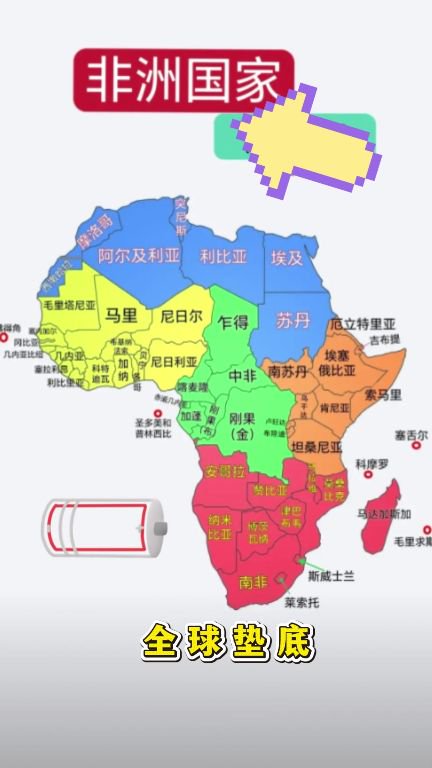
A region-by-region look at real power deficits: over 600 million people in sub-Saharan Africa lack stable electricity, with South Africa losing 200+ days a year and Nigeria 240+. India runs a 15%+ summer shortfall, Pakistani cities lose 6 to 12 hours daily and villages close to 20, Vietnamese industrial parks face scheduled weekly cuts, and Gulf states see summer gaps above 31%.
Five Overlooked Features in an All-in-One ESS: 10ms UPS, Wide Temps, Leveling Casters
Beyond power and capacity, this 12kW + 32kWh all-in-one differentiates on five things buyers skip: integrated plug-and-play design, wide temperature and high-altitude tolerance, SBU work modes with remote control, 10-millisecond UPS switchover, and four leveling casters for project sites.
Swapping Lead-Acid for Lithium: What the New 12.8V Steel-Shell Pack Fixed
Comparing two generations of 12.8V 100Ah/200Ah lead-acid-replacement packs: plastic to steel shell, voltage and SoC display added, RS485 comms and a DC output switch, plus Type-C and a 120W DC port that turn the pack into a giant power bank. Five things to check before you replace.
A Storage Factory Owner, Honestly: Why Our Videos Hardly Get Views
No pep talk. We posted dozens of clips on WeChat Channels, none past 5,000 views; on Douyin, only one ever hit 14,000. Here are the real numbers, where industrial accounts actually stall, and why we keep filming anyway.
Why This 3.6kW + 7.68kWh All-in-One Runs 0.5C: The Math Behind Ratio and Rate
Two 7.68kWh all-in-one units can age very differently. The difference is rarely capacity — it is discharge rate and inverter-to-battery ratio. Using a 25.6V 300Ah pack at 0.5C with a 1:2 ratio, here is what 0.5C actually limits and why it still covers a 3.6kW inverter.
Flying 100,000 km Across 20 Countries: Our Storage Market Research Route
Online data cannot answer why customers actually buy. Here is the route we planned — from Kashgar through Central Asia, South Asia, the Middle East, Europe, the Americas and Africa across 20 countries — and what we intend to verify on the ground in each region.
CIBF 2026 Shenzhen Battery Expo: Equipment Makers Were 60% of Exhibitors
Three days, over 400,000 visits, 280,000 square metres, 14 halls and close to 3,200 exhibitors — but the number that matters is the mix: equipment makers were about 60% of exhibitors while cell and battery makers were under 10%. A breakdown of the expo data, the three technology tracks on show, and what moving past price wars actually means for buyers.
A US-Spec All-in-One Power Station: It Charges From the Wall, Not Just the Sun
A US-market all-in-one power station: 3.6kW inverter, 7.68kWh battery (25.6V 300Ah), with battery, inverter and MPPT integrated in one cabinet. The most overlooked design detail is the AC input — during an outage with poor sun, plug into mains or a generator to recharge. A walkthrough of the port layout and three ways to refill the battery.
Where Southeast Asia's Storage Demand Is Real: Vietnam, Philippines, Indonesia
In Southeast Asia the worst power deficits are where the storage opportunity is largest. A country-by-country view: Myanmar and Cambodia are broadly short of power, while Vietnam, the Philippines and Indonesia have deficits concentrated in industrial belts, where factory curtailment drives commercial and industrial storage demand. Microgrids plus storage are the core solution.
How a 2000W Portable Power Station Is Built — and Why Every Unit Runs Two Full Cycles Before Shipping
A look at how a 2000W / 4kWh handheld-wall-mount power station comes off the line. Inside: a battery pack plus an inverter in one enclosure. After assembly every unit goes to the burn-in room for two complete charge-discharge cycles. The production steps and the factory burn-in standard, written for buyers who care whether their supplier is a real manufacturer.
Don't Throw That Battery Away — What a Manufacturer Can Actually Repair
When a home or project storage system fails, the knee-jerk reaction is to replace the whole unit. In reality a large share of faults are fixable at the factory: BMS boards, balancing, weak cells, loose connectors, inverter modules. What can be saved, what should be scrapped, and why go back to the OEM instead of a third party — written for buyers who care about after-sales.
Africa's Bestselling All-in-One: 3.6kW + 7.68kWh, 10ms UPS Switchover
Why a 3.6kW inverter paired with 7.68kWh of battery became the volume seller in Africa. What a 10ms UPS switchover means on an unstable grid, how grid plus solar work as simultaneous inputs, and why the inverter carries a 2-year warranty while the battery carries five.
Why Our 15kWh Pack Uses Active Balancing, Casters and Parallel Support
A 15kWh LiFePO4 pack built with an active-balancing BMS, heavy-duty casters and parallel capability. The logic behind each choice — cell consistency, install mobility and future expansion — and how it pairs with mainstream inverters.
Why We Built a Separate Version for South America: 110V Single-Phase vs 7.2kW Split-Phase
South America is our next growth market, and it needed its own machine. What 110V single-phase and split-phase 110/220V actually mean for your load, why 7.68kWh and 16kWh pair with different systems, and why the green housing and touchscreen are preference, not performance.
Why Central Asia Loses Power Every Winter: Hydro, Gas and Coal Each Have a Season
Half of Central Asia runs short on electricity. Why Kyrgyzstan and Tajikistan, both over 85% hydro, have surplus in summer and shortage in winter; why Uzbekistan, around 80% gas, loses a fifth of generation when winter gas tightens; why Kazakhstan has plenty of coal but a grid past its service life; and what seasonal shortage means for sizing storage.
How to Enter Central Asia: Uzbekistan, Kyrgyzstan-Tajikistan and Southern Kazakhstan
Chinese factories are shipping containerized storage into Central Asia. Why Uzbekistan is the first blue ocean, why Kyrgyzstan and Tajikistan are a winter off-grid microgrid market, why southern Kazakhstan suits large-scale projects — and what equipment each one actually needs.